
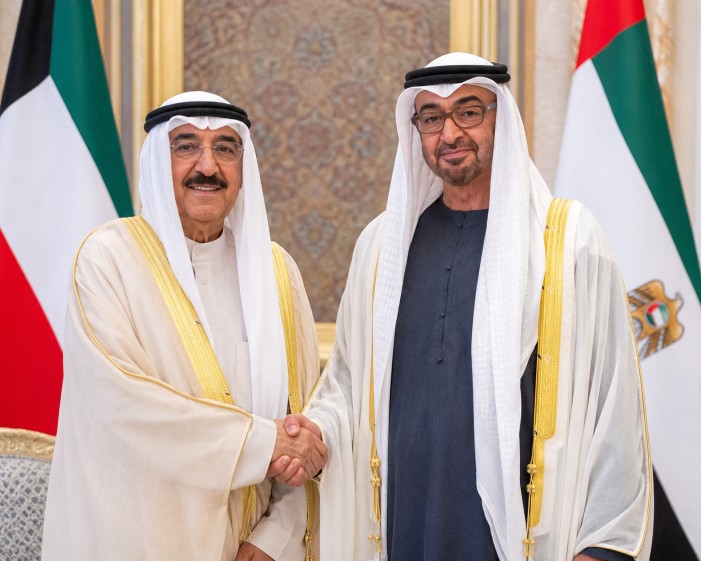
In a bid to enhance peace and stability across the region, Sheikh Mohamed bin Zayed Al Nahyan paid an official visit to Kuwait amid heightened tensions following recent missile and drone assaults. The attacks, originating from Iran, targeted the Gulf nation and were met with robust air defense responses from Kuwait. The visit underscored the urgent need for dialogue and cooperation, as Sheikh Mohamed engaged in discussions with Sheikh Meshal Al-Ahmad Al-Jaber Al-Sabah at Bayan Palace. Their talks centered on fortifying regional security, achieving lasting peace, and exploring avenues for economic and developmental collaboration.
The diplomatic engagement took place shortly after Kuwait’s defense systems successfully intercepted a series of ballistic missiles, a cruise missile, and multiple drones launched from Iranian territory. The interception efforts led to debris scattering across several locations, resulting in one individual sustaining injuries and causing material damage. Kuwaiti officials expressed strong condemnation of the assaults, denouncing them as breaches of the nation’s sovereignty and a considerable threat to the stability of the region. In response, the Kuwaiti government affirmed its right to employ all necessary measures to defend its borders, in alignment with international law.
Additionally, the Ministry of Foreign Affairs of the United Arab Emirates issued a statement condemning the attacks on Kuwait and Bahrain. The UAE reaffirmed its solidarity with both nations, pledging unwavering support for initiatives aimed at securing their safety and stability. This declaration of support highlights the broader regional concern over the escalating tensions and the collective pursuit of security and cooperation.
The visit by Sheikh Mohamed bin Zayed Al Nahyan is reflective of the broader diplomatic efforts to address and resolve the challenges faced by the Gulf region. Through such high-level discussions, leaders aim to reinforce alliances and establish a framework for enduring peace and progress. The commitment to expanding economic and development partnerships further emphasizes the importance of regional collaboration in navigating the complexities of current geopolitical dynamics.