
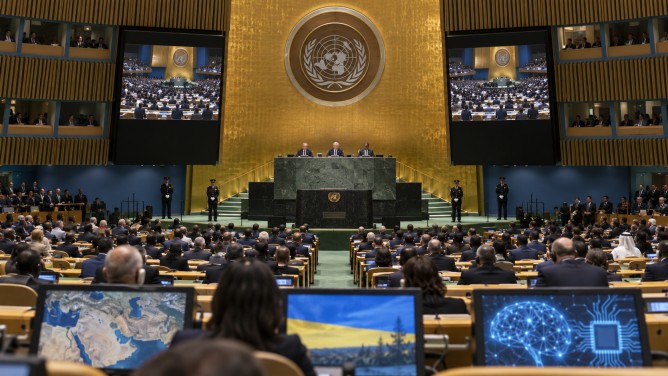
The global stage is set once again as world leaders converge in New York for the 81st session of the United Nations General Assembly. With international tensions escalating, this gathering highlights the pressing challenges of conflicts in the Middle East and Ukraine, alongside the rapid advancements in artificial intelligence and the future of global cooperation. Scheduled from September 22 to 26 and recommencing on September 28, the high-level general debate promises to be a forum for addressing some of the most critical issues faced by nations today.
The conflict in Ukraine is expected to be a significant topic of discussion. As the war continues to impact civilians and disrupt food and energy security, the international community remains deeply concerned about Russia’s influence as a permanent member of the UN Security Council, which complicates the body’s ability to take decisive action. Ukrainian President Volodymyr Zelenskyy, seizing the opportunity for diplomatic engagement, plans to meet with US President Donald Trump during the assembly to discuss these ongoing challenges.
The Middle East remains another focal point of the assembly, particularly the ongoing conflict involving Iran, which continues to pose threats to regional stability and global energy supplies. Iranian President Masoud Pezeshkian’s anticipated attendance, along with Israeli Prime Minister Benjamin Netanyahu’s scheduled address, underscores the critical nature of these discussions in shaping future diplomatic strategies.
Artificial intelligence also emerges as a major theme at this year’s assembly. UN Secretary-General António Guterres has been vocal about the need for international collaboration and the establishment of common safeguards as AI technology evolves rapidly. The UN’s prior creation of an advisory body on AI governance highlights the importance of this issue in maintaining global security and ethical standards.
Adding to the complexity of the discussions is the United Nations’ financial strain and its ongoing quest for reform. The United States recently contributed $725 million toward its UN obligations, a move that prevents the loss of its voting rights in the General Assembly. This financial commitment is juxtaposed with calls for spending reductions and structural changes within the organization.
As the UN navigates these multifaceted challenges, a potential leadership transition looms, with Secretary-General Guterres set to leave office at the end of 2026. This change adds yet another layer to the already intricate web of issues that world leaders must address during this pivotal gathering in New York.