
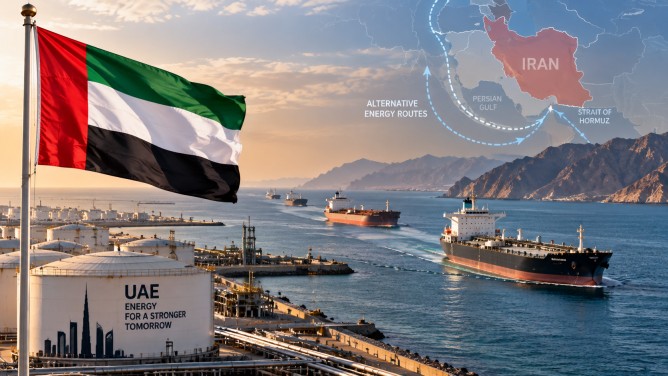
In response to the ongoing tensions between the United States and Iran, the United Arab Emirates is actively pursuing the development of alternative routes for its energy exports and trade. This strategic move is aimed at reducing the nation’s reliance on the Strait of Hormuz, a critical chokepoint that has become increasingly vulnerable amid regional conflicts. Anwar Gargash, a prominent adviser to the UAE president, emphasized the nation’s commitment to ensuring that its economic activities and energy exports remain unaffected by these geopolitical stresses. As part of this effort, the UAE is enhancing its port facilities on the eastern coast and investing in new pipelines, railways, and trade corridors.
Gargash expressed hope for eventually improving relations with Iran, but he cautioned that rebuilding trust after recent attacks would be a lengthy process. He also urged for stronger coordination among Gulf Arab nations to collectively address regional security challenges. The sentiment for increased self-reliance was echoed by Qatar, where Foreign Ministry spokesperson Majed al-Ansari highlighted the importance of maintaining strategic ties with the United States while advocating for Gulf countries to not solely depend on these alliances for security.
The Strait of Hormuz continues to be a focal point of international concern, handling a large portion of global energy supplies. Any disruption in this vital waterway has the potential to spike energy prices and cause ripples across the global economy. The UAE’s proactive stance aims to mitigate such risks by ensuring that its trade and energy exports have multiple pathways, thereby safeguarding its economic interests against potential blockades or conflicts in the Strait.
Gargash underscored the necessity of credible assurances to protect Gulf nations from future attacks, asserting that freedom of navigation should remain inviolable and not be used as a bargaining chip in geopolitical negotiations. As the UAE advances its infrastructure projects, the broader Gulf region is being prompted to reconsider its security arrangements and the degree of its reliance on external powers.